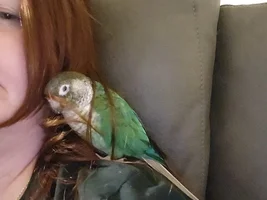
COCKATIELS MATING NON STOP - HELP

Vivian Caria

New member
Joined
Dec 16, 2025
Messages
4
Reaction score
8
Parrots
Cockatiel couple
Hi there! Need some advice here... I have a couple of cockatiels, both for around 4 years now. They had eggs first time this year. I replaced the real eggs with dummies ones, waited around 45 days and then removed the next box since they weren't losing interest by themselves. Well, that was 4 days ago and now they trying to mate all the time, and I'm really worried that the female start to lay eggs again this soon. I'm already removed everything they could possibly use as next and they are sleeping around 14 hours per day, but the mating isn't descreasing.... There's anything else I should do?
If there is no nexting box, what is the real chance of her starting to lay eggs again?
 
Hi there! Need some advice here... I have a couple of cockatiels, both for around 4 years now. They had eggs first time this year. I replaced the real eggs with dummies ones, waited around 45 days and then removed the next box since they weren't losing interest by themselves. Well, that was 4 days ago and now they trying to mate all the time, and I'm really worried that the female start to lay eggs again this soon. I'm already removed everything they could possibly use as next and they are sleeping around 14 hours per day, but the mating isn't descreasing.... There's anything else I should do?
If there is no nexting box, what is the real chance of her starting to lay eggs again?

Welcome to the forums, @Vivian Caria and your very active 'tiels! You definitely should remove the nest box and anything else they may perceive as a nesting site, and that will include blocking access to anywhere in your house that might appeal to them as a good prospect for laying. Cockatiels are notoriously proficient egg-layers however, so even that will not necessarily guarantee they won't lay. I had a female 'tiel years ago who did not have a male partner and still occasionally laid eggs on the bare floor of her cage.

Are they housed together? If so, you'll need to consider getting a separate cage for your female so that she can get a little time away from your rooster. All that egg laying is exhausting and can easily deplete calcium and minerals from her bones which is not safe. Their cages can still sit side by side so they can communicate, and they can still have supervised out-of-cage time together. They may not like it and will probably scream very loudly about it for a while, but the constant mating should be curtailed for the good of her health. I hope this helps you and your 'tiels! 🙏
 
Welcome to the forums, @Vivian Caria and your very active 'tiels! You definitely should remove the nest box and anything else they may perceive as a nesting site, and that will include blocking access to anywhere in your house that might appeal to them as a good prospect for laying. Cockatiels are notoriously proficient egg-layers however, so even that will not necessarily guarantee they won't lay. I had a female 'tiel years ago who did not have a male partner and still occasionally laid eggs on the bare floor of her cage.

Are they housed together? If so, you'll need to consider getting a separate cage for your female so that she can get a little time away from your rooster. All that egg laying is exhausting and can easily deplete calcium and minerals from her bones which is not safe. Their cages can still sit side by side so they can communicate, and they can still have supervised out-of-cage time together. They may not like it and will probably scream very loudly about it for a while, but the constant mating should be curtailed for the good of her health. I hope this helps you and your 'tiels! 🙏
Thanks for the reply! I'm trying to keep their physically separated for now...
 
I'd also keep an eye on any soft foods you're giving them, such as cereals and wet pellets. Sometimes that can trigger a tiel into breeding mode.
 
you'll need to consider getting a separate cage for your female so that she can get a little time away from your rooster. All that egg laying is exhausting and can easily deplete calcium and minerals from her bones which is not safe. Their cages can still sit side by side so they can communicate, and they can still have supervised out-of-cage time togethe
This is exactly what i did a couple years ago. After while they dont mind having their own cages. After supervised time together in the evenings, they happily return to their own cages. Their cages are side by side ALWAYS.
 
The only soft foods they eat are some vegetables, since they kind picky with greens. But I'll try to stick with pellets and non soft foods.

I don't have 2 cages, but I do work from home, so for now I'm rotating time out, when hen is out, make is inside cage and so on.
Also made big changes on perches and toys placement.... Hope it helps.

Thanks for the help :)
 
I agree with physically separating the male and the female. In fact, I would separate them to different rooms preferably a good distance apart. When they are out of each other's sight and ideally out each others hearing the crazy hormones should calm down after a few weeks apart. The problem will be when you eventually reintroduce them. It's very hard sometimes to get a bonded pair that has nested before and have a history of very active mating to stop. I have this problem with some of my budgies. I had no choice but to separate the couples completely or they would breed to death. Cockatiels are known to be very prolific breeders, just like budgies. Excessive breeding and chronic egg laying is very bad for the females' health, causing calcium deficiency and egg binding which can easily be fatal.

There are injectable periodic hormone treatments that can be given to the hen to control her hormones and prevent egg laying but the medication is very expensive and not easily available everywhere. It's usually effective but is usually the last resort due to the cost.
 
I would separate them to different rooms preferably a good distance apart.
Im all for separate cages but not distancing them like that right off the bat. While this is probably the most effective i and alot of others would consider this cruel and inhumane. A bonded pair being torn apart suddenly just isnt healthy for either bird.

There are injectable periodic hormone treatments that can be given to the hen to control her hormones and prevent egg laying but the medication is very expensive and not easily available everywhere. It's usually effective but is usually the last resort due to the cost.
Its true that Lupron can be hard to come by but its not that expensive in my mind. $50 an injection is what i pay. The tech fee is only $15. Small price to pay in my opinion.
 
I don't want to be cruel to bonded birds but if you can't get egg laying under control you risk your female becoming calcium depleted and dying from egg binding. I lost beautiful female budgie to egg binding and it is a terrible way to die. The hormone injections can be a Godsend. My avian vet recommends Deslorelin implants. I'm going to start one of my female budgies on it after the holidays. My vet office here in Maine told me that Lupron implant would be at least $400 per injection. The Deslorelin would be half that amount and would last much longer especially in birds the size of budgies and cockatiels.
I wonder where Lupron would cost only $50. My vet doesn't have a supplier that can provide it for any reasonable $$ amount.
 
I dont know which implant it was when i asked my vet about it. He said he would do it but recommended against it in such a small bird such as a cockatiel. He said the implant is the size of a large grain of rice. Theyre actually made for ferrets. I get her the liquid injection.
I live in PA. Im told Lupron is next to impossible to get in the states nowadays for some reason. He orders it from India.
 
I guess my vet won't order it from India. I wouldn't have a problem with it but it's illegal to order medications from India to ship to the US for use in humans.

The implant has been used successfully in birds the size of cockatiels, lovebirds and budgies, but the bird would need to be lightly sedated for the procedure. They usually implant the rice sized implant between the wings on the back so the bird can't easily pick at it, but there's a risk any time you have to give any anesthsia to a bird, especially one that small. As much as I fear the anesthsia risk, I'm going to go ahead with it for my female budgie.
 
Hey everyone, After a few days of chaos, they finally calmed down!
I'm giving them 2+ hours of sleep, keeping them physically apart during the day (same room, but one inside the cage while the other was out) and removed everything that could resemble a nest or nesting materials. Also for now both are eating only hard foods, nothing mushy or too soft.
Hen is back to her old self, male still a bit horny, but I'll keep this setup at least until year's end, and since they just started molting as well, hopefully it will also help to cease the hormonal frenzy.
 

Most Reactions

Latest posts

Back
Top Bottom