Desperately need help with Quaker

Vilatus

Well-known member
Joined
Jul 17, 2017
Messages
529
Reaction score
468
Location
Michigan
Parrots
One Quaker, Nico
Hi all,

I’m deeply saddened that I have to make this post but I need help, badly. My Quaker has grown increasingly aggressive over the last year, but in the past two months he has also started becoming very frustrated I believe.

He has a flight cage, which is big enough for him, but quite frankly I’d love if I could give him more room. Right now it isn’t really an option due to space limitations. He has toys, stuff to chew, etc. His cage is in front of a window so he can look outside all day, and I generally leave the TV on with soft music for him.

I work 9-5 every day, and spend time with him out of the cage usually from around 4:30-7. I know this is not enough, but with my other obligations (cooking, cleaning, etc.) it is all I can reasonably do on a week day. To supplement this, my partner usually has him out for an hour or two throughout the day, as he is currently unemployed. For context, we live with my parents currently.

Nico (my bird) is too aggressive for my other family members to handle, and they are afraid of him. So it’s just the two of us. He has seemingly become increasingly frustrated, hanging on the sides of the cage, snapping at us through the bars, and literally attacking us without warning. He will sit in his cage and grab his feet and shake them.

I’m used to some level of aggression, he is a Quaker after all- but he will randomly attack and clamp down and try to take chunks out of you. This of course, leads to him going back in the cage.

Please, if anyone can point me in the right direction, I need help. I do not want to have to rehome him. He’s my baby. But obviously I am not giving him what he needs and I do not want him to become so frustrated he starts plucking.

Thank you.
 
  • Sad
Reactions: AMD
To add to the post, I cannot reasonably ask my other family members to pick up the slack as far as cooking and cleaning. They simply will not. I can ask my partner, but I already ask a lot of him.
 
Sorry to hear that. How old is Nico? What is his diet? Some of the cage behavior you're describing is not uncommon with most parrots. Diet and age are important. If he's hormonal some of his behavior can be accounted for. There are foods that increase the negative behavior. Hopefully those more familiar with your little guy can help more. In the meantime post a picture. Have his age as close as you can and diet. That way others more familiar can help
 
  • Like
Reactions: AMD
Sorry to hear that. How old is Nico? What is his diet? Some of the cage behavior you're describing is not uncommon with most parrots. Diet and age are important. If he's hormonal some of his behavior can be accounted for. There are foods that increase the negative behavior. Hopefully those more familiar with your little guy can help more. In the meantime post a picture. Have his age as close as you can and diet. That way others more familiar can help
He’ll be five in August. He primarily eats Harrison’s pellets, and I try to offer a veggie mix somewhat often but honestly I do struggle. He loves Nutriberries as well. The behavior wouldn’t concern me if it wasn’t so new, but he’s never acted like this. I’ve had him since he was about seven months.

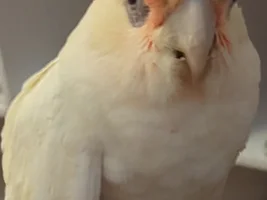
This is my boy. We had a good day today actually, he was out for about seven hours and was mostly friendly.
IMG_8797.webp
 
First off, what a beautiful boy. I am no expert, but I wonder if it could be hormonal? I know that my Amazon has been extremly hormonal, and aggression can be part of that. Hopefully others will have some answers. Good Luck
 
I agree a very beautiful boy. I also thought behavior sounds hormonal. When my Grey gets hormonal I sometimes have to tip toe around her. There are posts here about dealing with hormonal birds. If it is hormones he can't help it . You need to learn work arounds. Others hopefully may have specific Quaker help.
 
SO 2 things - keep Quakers busy! Give him a big handful of popsicle sticks and let him build forts! They love doing that.

The other is stop putting him back in the cage after a bite. That trains him to bite when he wants to go back to the cage. Instead start using the practice of SHunning!

Biting, whether intentional or not, just over preening your skin or actually taking chunks of meat out - all are PAINFULL! In the wild that sort of behavior is not tolerated by the flock. They ostracize flock members who continue to act like that. We call it 'Shunning'. This WILL work, but needs to be done correctly to get the message across and it needs to be done IMMEDIATELY so the parrot can associate the bite with the shunning action. And it needs to happen every time and with anyone involved with the parrot.

When the bite or over preening occurs:

  • Say in a forceful but not shouting voice "No Bite" or other endearments.
  • Immediately place the parrot on a nearby, handy chairback. NOT the cage (that would only teach the parrot to bite when he wants to go back to his cage).
  • Turn your back to him and ignore him for 1 minute. No peeking, no talking about or too him, NADA. NO eye contact. No less or the message is lost, no more or the bird will not associate the action with the bite.
  • After a minute you can try to re-establish contact.
Rinse, repeat as needed. Most parrots get the message after a few times, some may need more. Also very important - make sure the bite is not your fault. Annoying your parrot, asking him to step up when he is otherwise preoccupied with eating or playing, bothering him during known moody times like mating season, or ignoring the warnings and body language of your parrot - these are bites that you deserve! Learn, and be a better parront !!
 
  • Like
Reactions: AMD
First off, what a beautiful boy. I am no expert, but I wonder if it could be hormonal? I know that my Amazon has been extremly hormonal, and aggression can be part of that. Hopefully others will have some answers. Good Luck
Thank you ā˜ŗļø It very well could be. Honestly, I think him and his sister (a budgie) are having a hard time this spring/early summer.
 
  • Like
Reactions: AMD
SO 2 things - keep Quakers busy! Give him a big handful of popsicle sticks and let him build forts! They love doing that.

The other is stop putting him back in the cage after a bite. That trains him to bite when he wants to go back to the cage. Instead start using the practice of SHunning!

Biting, whether intentional or not, just over preening your skin or actually taking chunks of meat out - all are PAINFULL! In the wild that sort of behavior is not tolerated by the flock. They ostracize flock members who continue to act like that. We call it 'Shunning'. This WILL work, but needs to be done correctly to get the message across and it needs to be done IMMEDIATELY so the parrot can associate the bite with the shunning action. And it needs to happen every time and with anyone involved with the parrot.

When the bite or over preening occurs:

  • Say in a forceful but not shouting voice "No Bite" or other endearments.
  • Immediately place the parrot on a nearby, handy chairback. NOT the cage (that would only teach the parrot to bite when he wants to go back to his cage).
  • Turn your back to him and ignore him for 1 minute. No peeking, no talking about or too him, NADA. NO eye contact. No less or the message is lost, no more or the bird will not associate the action with the bite.
  • After a minute you can try to re-establish contact.
Rinse, repeat as needed. Most parrots get the message after a few times, some may need more. Also very important - make sure the bite is not your fault. Annoying your parrot, asking him to step up when he is otherwise preoccupied with eating or playing, bothering him during known moody times like mating season, or ignoring the warnings and body language of your parrot - these are bites that you deserve! Learn, and be a better parront !!
I’ve tried the popsicle sticks before and he didn’t care for them, I was so sad! I’ll try again.

Gotcha. I’ve heard of shunning but reading your post fully I don’t think we’ve been strict enough about it.

I’d like to say most of the bites aren’t my fault, but I’m not sure. Nico has very dark eyes and it makes it quite hard for me to read his emotions. Prior to him I had an albino budgie who had super bright eyes and it was always easy to tell. I think unfortunately we’ve entered a nasty cycle where he’s just angry at me because we have negative interactions all the time it seems now. I try and not ask him to step up if he’s busy, I don’t pet him unless he consents, (I offer a finger and if he doesn’t put his head down I don’t do it) etc.

He has resorted recently to flat out lunging at me unprovoked, so that’s why we’re here. I’ve been working with him more the past couple days and I think we’re making progress, so I’ll be implementing shunning for sure.
 
  • Like
Reactions: AMD
Not just eyes, but posture and feathers are clues too. Birds talk with their body. Fluffed up depending upon circumstance can mean different things. For my CAG fluffed with her head up means content and preparation preening and a nap. Fluffed up with strangers or looking at or about means watching and attack possible. Eye pining can mean pleasure, excitement, curiosity, not just wanting to bite. Take in the whole body. That can help a lot.
 
Back
Top Bottom