Hi everyone, I need some opinions on my young male Eclectus, who is only about 5–6 months old.
Over the past couple of weeks he's been developing black discoloration on his feathers. I know black feathers in Eclectus are usually associated with diet/liver issues, and I'll be honest — he was on a heavy sunflower seed diet until recently (I didn't know Eclectus shouldn't be fed like regular seed-eating parrots). I've already started fixing the diet, moving to fresh veggies and cutting the seeds down. One thing I'm also wondering about is pellets. My bird has been eating Nutribird A15 pellets daily. Do you think the pellets could have contributed to the problem?
But here's what's confusing me: the black spots seem concentrated on his chest, shoulders and back — roughly the areas he can reach while preening. His head looks clean. So now I'm wondering:
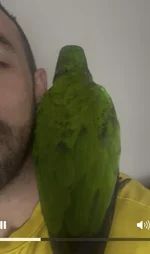
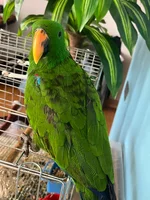
Photos attached. Has anyone experienced something similar? Should I go straight for bloodwork or is it reasonable to fix the diet first and watch the new feathers come in during molt?
First photo 3 week ago , second photo right now
Over the past couple of weeks he's been developing black discoloration on his feathers. I know black feathers in Eclectus are usually associated with diet/liver issues, and I'll be honest — he was on a heavy sunflower seed diet until recently (I didn't know Eclectus shouldn't be fed like regular seed-eating parrots). I've already started fixing the diet, moving to fresh veggies and cutting the seeds down. One thing I'm also wondering about is pellets. My bird has been eating Nutribird A15 pellets daily. Do you think the pellets could have contributed to the problem?
But here's what's confusing me: the black spots seem concentrated on his chest, shoulders and back — roughly the areas he can reach while preening. His head looks clean. So now I'm wondering:
- Could this be the seed oils getting on his beak and spreading onto the feathers during preening, rather than an internal issue?
- Or is this distribution just a coincidence and it's actually nutritional/liver related?
- Can feather color even change this fast (~2 weeks) from diet alone, since already-grown feathers shouldn't change color internally?
- I was also using a bath spray product — could that have contributed?
Photos attached. Has anyone experienced something similar? Should I go straight for bloodwork or is it reasonable to fix the diet first and watch the new feathers come in during molt?
First photo 3 week ago , second photo right now
Attachments
Last edited by a moderator: