taiyothemacaw
New member
Hi all! This is my first post.
I've been reading through some threads here, but I'm seeing a lot of mixed advice and I'm desperate for some (generally) clear-cut advice so I don't mess up training with my bird!
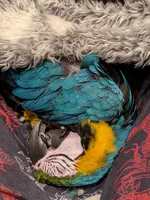
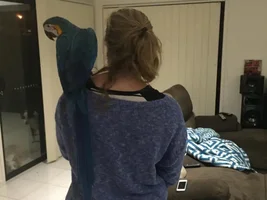
So less than a week ago (tomorrow is the 4th day of ownership), I've taken in a 9 month old B&G macaw. My history of parrots has consisted of budgies, conures, and cockatiels. Something I didn't realise was just how DIFFERENT macaws behave to my conures, who passed a couple years ago due to no fault of our own.
This macaw was unfortunately neglected in the sense that he has been cage bound for some time with his past owner who was unable to care for him due to disability reasons.
Taiyo, the name I've picked for him, is a smart bird who loves to get his way. Which is fine, but I don't want him to think he can dominate my family.
Day one: gave him lots of new treats (he hadn't tried fruit before), began target training, and taught him to step up by the end of the day. Initially he was very nervous to put both feet on my hand. Before he could step up, he was happy to hold hands through the cage and use his beak to gently probe the skin. He also allowed head scratches. After he learned step up, I brought him to the couch and set him down with me; he got excited and started rolling over while holding my hand, playing with me — but his bites while doing this were a little more rough and actually started to hurt.
Day two: Brought him out the cage, he stepped up, and I introduced him to his first shower and blowdry (he was unsure what to make of the spray but loved the blowdry. No scared or uncomfortable behaviours here). Took him onto my bed and we played again, also did some more target training. Realised he started to bite harder this day instead of the gentle probing from before. Bluff lunges while he's on the cage.
Day three: Bites are painful, no longer light pinches, but like he's genuinely trying to play with the bones under my skin. Also started to bluff lunge more. Gets mad when hands are above his head for about 1-2 seconds and then lets you scratch him (which he loves) <— this has been going on since day 1 too.
Things to note:
- bites are now hard and painful to endure but not drawing blood
At first, I was taught to tolerate the biting and not reward nor discipline it. I'm now hearing that I shouldn't have done that, and that he needs to be taught that biting is bad, rather than tolerated.
- he steps up beautifully when offered a treat, otherwise he'll ignore your offered arm and go straight to biting your hand.
- sometimes while petting his head, he'll make an annoyed noise and try and bite my fingers if I touch the skin of his cheek. He's just really obsessed with biting hands for some reason.
- he had zero toys in his old home, literally nothing to chew or destroy, so I've given him LOTS of toys and activities to enjoy, but the biting persists.
What can I do? I've heard about bite pressure training as well as negative bite enforcement. When he bites hard, should I react by saying NO, move him to an outside perch (like a chair) and ignore him for a few minutes? Or is there something else I should do?
Anything else I should be aware of? I don't force him to step up or anything like that, he's a free creature who can come to me when he pleases.
I've been reading through some threads here, but I'm seeing a lot of mixed advice and I'm desperate for some (generally) clear-cut advice so I don't mess up training with my bird!
So less than a week ago (tomorrow is the 4th day of ownership), I've taken in a 9 month old B&G macaw. My history of parrots has consisted of budgies, conures, and cockatiels. Something I didn't realise was just how DIFFERENT macaws behave to my conures, who passed a couple years ago due to no fault of our own.
This macaw was unfortunately neglected in the sense that he has been cage bound for some time with his past owner who was unable to care for him due to disability reasons.
Taiyo, the name I've picked for him, is a smart bird who loves to get his way. Which is fine, but I don't want him to think he can dominate my family.
Day one: gave him lots of new treats (he hadn't tried fruit before), began target training, and taught him to step up by the end of the day. Initially he was very nervous to put both feet on my hand. Before he could step up, he was happy to hold hands through the cage and use his beak to gently probe the skin. He also allowed head scratches. After he learned step up, I brought him to the couch and set him down with me; he got excited and started rolling over while holding my hand, playing with me — but his bites while doing this were a little more rough and actually started to hurt.
Day two: Brought him out the cage, he stepped up, and I introduced him to his first shower and blowdry (he was unsure what to make of the spray but loved the blowdry. No scared or uncomfortable behaviours here). Took him onto my bed and we played again, also did some more target training. Realised he started to bite harder this day instead of the gentle probing from before. Bluff lunges while he's on the cage.
Day three: Bites are painful, no longer light pinches, but like he's genuinely trying to play with the bones under my skin. Also started to bluff lunge more. Gets mad when hands are above his head for about 1-2 seconds and then lets you scratch him (which he loves) <— this has been going on since day 1 too.
Things to note:
- bites are now hard and painful to endure but not drawing blood
At first, I was taught to tolerate the biting and not reward nor discipline it. I'm now hearing that I shouldn't have done that, and that he needs to be taught that biting is bad, rather than tolerated.
- he steps up beautifully when offered a treat, otherwise he'll ignore your offered arm and go straight to biting your hand.
- sometimes while petting his head, he'll make an annoyed noise and try and bite my fingers if I touch the skin of his cheek. He's just really obsessed with biting hands for some reason.
- he had zero toys in his old home, literally nothing to chew or destroy, so I've given him LOTS of toys and activities to enjoy, but the biting persists.
What can I do? I've heard about bite pressure training as well as negative bite enforcement. When he bites hard, should I react by saying NO, move him to an outside perch (like a chair) and ignore him for a few minutes? Or is there something else I should do?
Anything else I should be aware of? I don't force him to step up or anything like that, he's a free creature who can come to me when he pleases.