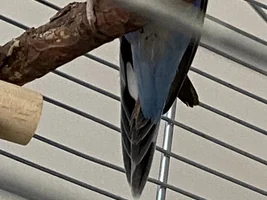
Heya all!
Sorry this is my first post here and I will try to make it as cohesive as possible (I'm native Dutch so apologies if I spell things wrong).
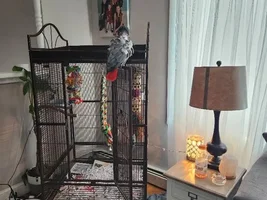
My bird Lorrito (at least 32+, he was a wild capture so we don't know his age, we suspect he's in his 40's), who lives with my mom together with Django (8, our African Grey), was a bit sick last week (noticed it Friday and it was better on Saturday again). He didn't eat as great as usual, was bopping a bit and seemed a bit breathy on Saturday/ Sunday - this was the 30th of August.
Since I live in German, 4 hours away, there was no way for me to get there fast enough and bring him to the vet. Sidenote, I am the only one who can handle him without getting bitten. My mom overcame her fear and caught him and brought him to the vet on Sunday.
He was put in an oxygen tank right away. Where they gave him antibiotic through injection. In March he had a full health check where he was deemed healthy (by a specialized bird vet), including normal lung sounds. They also made a photo and he had severe pneumonia in both lungs. They then consulted the bird vet (who is retired) who saw him in March as well as another bird vet (I don't know how good she is). Where they discussed aspergillosis as a potentional. So they started anti fungal was well.
Over the days he started making a little bit more sounds, and he was really tired after doing so. He did eat a little bit here and there but they kept forcefeeding him since he went from 350 in March to 300 now. On the third they made another picture with no visible changes. The lungsacks were clear I believe, but it was still bad. On that day where they made a picture he was the worst out of all days and we thought he was going to die. Genuinely looked really bad .
.
Thankfully the next hours/ day he improved slowly again. However, despite seeing visible changes in his behaviour/ eating, the vets keep saying he's stable, there's no real improvement. Mind you he went from out of breathe all the time, to out of breathe only when handled and has been off the oxygen twice now and did really well (only when they catch him for forcefeeding/ medicating him is when he's short of breath). I also opted the idea of what if it's coming from his heart instead, since it's common in Amazones. But the 2nd bird vet suspects it might be a chronic lung disease, they can send him to Utrecht and swap him but he might not even survive that + there's nothing they would be able to do for him if it is.
He is making more and more sounds and is eating much better than before. My mom has been going there every day and I have him on the phone talking to him and you can visible see him look up and trying to make noises (I try not to engage too much with my usually hype voice as I don't want to exert him into becoming tired.).
So considering the vets opinion, I'd like to hear others who had a bird with aspergillosis and a double pneumonia. We are just over him being there for a week. I would think double pneumonia, if its fungal related will take longer than one week to become seemingly better, especially since it's such a severe infection.
How long did it take for your bird to recover/ show improvements to the vet themselves. Again there's visible improvements, but the vets don't seem to think the same due to his out of breath when being handled.
Sorry for the long text, thank you for reading and hope to see some other experiences. I still think this all is promising so far.
I will be traveling home probably this weekend (unless he has to stay longer) so I can help medicate him (hopefully) once he's back home again.
Sorry this is my first post here and I will try to make it as cohesive as possible (I'm native Dutch so apologies if I spell things wrong).
My bird Lorrito (at least 32+, he was a wild capture so we don't know his age, we suspect he's in his 40's), who lives with my mom together with Django (8, our African Grey), was a bit sick last week (noticed it Friday and it was better on Saturday again). He didn't eat as great as usual, was bopping a bit and seemed a bit breathy on Saturday/ Sunday - this was the 30th of August.
Since I live in German, 4 hours away, there was no way for me to get there fast enough and bring him to the vet. Sidenote, I am the only one who can handle him without getting bitten. My mom overcame her fear and caught him and brought him to the vet on Sunday.
He was put in an oxygen tank right away. Where they gave him antibiotic through injection. In March he had a full health check where he was deemed healthy (by a specialized bird vet), including normal lung sounds. They also made a photo and he had severe pneumonia in both lungs. They then consulted the bird vet (who is retired) who saw him in March as well as another bird vet (I don't know how good she is). Where they discussed aspergillosis as a potentional. So they started anti fungal was well.
Over the days he started making a little bit more sounds, and he was really tired after doing so. He did eat a little bit here and there but they kept forcefeeding him since he went from 350 in March to 300 now. On the third they made another picture with no visible changes. The lungsacks were clear I believe, but it was still bad. On that day where they made a picture he was the worst out of all days and we thought he was going to die. Genuinely looked really bad
. Thankfully the next hours/ day he improved slowly again. However, despite seeing visible changes in his behaviour/ eating, the vets keep saying he's stable, there's no real improvement. Mind you he went from out of breathe all the time, to out of breathe only when handled and has been off the oxygen twice now and did really well (only when they catch him for forcefeeding/ medicating him is when he's short of breath). I also opted the idea of what if it's coming from his heart instead, since it's common in Amazones. But the 2nd bird vet suspects it might be a chronic lung disease, they can send him to Utrecht and swap him but he might not even survive that + there's nothing they would be able to do for him if it is.
He is making more and more sounds and is eating much better than before. My mom has been going there every day and I have him on the phone talking to him and you can visible see him look up and trying to make noises (I try not to engage too much with my usually hype voice as I don't want to exert him into becoming tired.).
So considering the vets opinion, I'd like to hear others who had a bird with aspergillosis and a double pneumonia. We are just over him being there for a week. I would think double pneumonia, if its fungal related will take longer than one week to become seemingly better, especially since it's such a severe infection.
How long did it take for your bird to recover/ show improvements to the vet themselves. Again there's visible improvements, but the vets don't seem to think the same due to his out of breath when being handled.
Sorry for the long text, thank you for reading and hope to see some other experiences. I still think this all is promising so far.
I will be traveling home probably this weekend (unless he has to stay longer) so I can help medicate him (hopefully) once he's back home again.