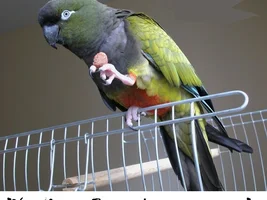
Hormonal Conure

rosietpoes

New member
Joined
Sep 30, 2024
Messages
10
Reaction score
14
Parrots
Green Cheeked Conure, Parakeets
Hello,

I have a green cheeked conure that has been exhibiting hormonal behavior since the end of march/beginning of April.

I have taken her to the vet (altho she is likely a he) and the vet said she is healthy.

She masturbates on things occasionally, but the bigger issue is her regurgitation all of the time, on toys, perches, food bowl, cage latch.

I try to discourage the behavior but since I’m posting here, clearly has not changed :/

Actions I’ve taken include-
-Vet visit
-increasing sleep hours
-covering cage at night
-giving less food (nothing crazy just enough to hopefully discourage mating behavior)

I really am not sure what to do at this point. I have fears that this is due to too much time in her cage?
Because i have started going to the gym after working 8 hours away from home, so I’m home less often.

Another trigger could be an increased heat/humidity in the home due to the summer.

I’ve gotten a dehumidifier and will be putting AC in her room soon.

And lastly, my biggest fear is that there really is no possible place I could put her in my home where she is actually away from all sound and disturbances at night. I have neighbors in my row home with children and they are audible in every single room in my apartment. This goes on until at least 9/10, so even if I put her to bed early and cover her, I can hear she’s not sleeping.

Uhhh I think shes a he because this has been going on longer than I expected and she has had no eggs. She is 6 years old.

Any advice is appreciated!

Would a new cage help if it’s possible that the issue is that she’s viewing her cage is her “nest”??

IDK what to do I could cry :’) TY
 
  • Sad
Reactions: AMD
This is by far the worst hormonal experience she has had, in the past it has been limited to a week maybe and some masturbation and shes done
 
i'm following this post as i'm in the same boat. i have a female conure who's been hormonal for 6 weeks now.
 
@rosietpoes - i just found another post about hormones, might be helpful for you. it was for me.

On Hormones (or Horror-mones)

Parrots go thru puberty, just like humans do, because their internal metabolism tells the body –“Hey time to start thinking of babies”. When that happens, their little bodies get flooded for the first time with hormones. The when is only estimated, puberty can occur from 6 months or so for small parrots like budgies, cockatiels and parrotlets, with the larger parrots taking longer, progressively. Macaws and cockatoos, it could be a year or more before it starts. Puberty (and successive mating seasons) is not a precisely timed event. Depending on the individual parrot, it might occur earlier or later then the norm for that species, and other factors come into play on when it starts.

Like human children (and our parrots are so close in temperament to children), puberty can bring on all sorts of behavioral changes, which the parrot has absolutely no control over. One minute they are their normal selves and all of a sudden, BAM, they bite you, and the next second they are back to their normal selves. Mood swings like this are so common that for inexperienced parrot owners, this is the time when parrots are most often given up or surrendered. They can do a 180 degree turn and formerly the person who was THE person is now like yesterday’s news and the parrot might fixate on another member of the family (and it might not be one who actually likes parrots!). This does not happen every time, but it does happen, and the former favorite person needs to wheedle and scheme to get back into the parrots inner circle.

Some other behavior you might encounter:

  • Trying to mate with objects like toys or food bowls, even your hand. Butt rubbing is what this looks like.
  • Regurgitation and trying to feed inanimate objects (or you ! )
  • Shredding paper, bedding, or any material that can be made into nest like stuff
  • Seeking dark hidey places
  • Being abnormally loud and making new clucking noises or others
Puberty can last anywhere from a few months to a year or so in larger parrots, again depending on species and the individual parrot. The 2 things to take away on this is that it will come to an end eventually and the other is to try and not let unwanted behavior become normal or habitual.

And now we come to mating season. Most parrots go through an annual mating season. Species like Eclectus parrots and a few other rare ones can have mating season at any time the environment produces mating triggers. For the rest, its once a year. Mating season is triggered by some things we can control and others that we cannot. The behavioral result of mating season is very similar to the ones displayed in puberty, with the exception of switching allegiances to a new person, which is rare. Uncontrollable rapid mood swings are pretty common and can vary with the intensity of the hormone release. Some years mating season can be pretty mild, and some are just killer for the poor parrot, as the drive to mate is frustrated (unless you are a breeder). The diurnal cycle of daylight to night time is one of the stronger triggers. Some folks keep their parrots on a day/night cycle that mirrors this, while others keep a 12hr day/night cycle. Either one has its pros and cons and we won’t get into that here.

Some things you can do to reduce (but never 100% eliminate) the effects of mating season are:

  • Remove any shreddy type materials and limit access to them when the parrot is out of the cage
  • Prevent access to dark hidey holes
  • No touching the parrot anywhere except for the head and neck. This is a biggie as this can be interpreted as mating behavior by the parrot.
  • Limit or remove sugar bearing foods, like fruits and high fructose foods like corn, any pasta, etc
  • Lots of exercise – a tired parrot is less likely to indulge in mating behavior
Always keep in mind that the parrot has no control of itself during these periods! A bite received during them is 100% different than a bite you might get because the bird is angry with you. You should not use “shunning” or other methods to modify the behavior, because they have no more idea of why they bit you then you do. But, same as a normal bite, you should try to avoid being in a situation where the bite COULD occur. Cuddling with your parrot, giving/getting kisses or letting them near the face during mating season is likely not a good idea! Along these lines, during mating season, try to not let behavior like biting, humping or other outward signs become habitual.

Finally – always, always remember – “THIS TOO SHALL PASS”. Your loving friend is still in there and will be back!
 
I appreciate your response! I definitely think there’s a trigger thats making it worse than usual. I have the AC in now hoping that the thing sucks some humidity out and helps her calm her emotions. I am definitely going to work on getting her some more exercise, maybe just run away from her while she flies chasing me for a bit LOL
 
  • Like
Reactions: AMD
What does her diet look like? Any seed or fruit?
 
What does her diet look like? Any seed or fruit?

She’s on Roundybush pellets primarily, not a veggie kind of bird, and no fruits or seeds since this started
 
I agree horror-mones are the bane of all bird owners. My daughter was working midnight shifts from home for awhile. No way for decreased noises. (Some kind of telephone work). I got a black out curtain. Covered cage so one short side was not covered. I covered it with a towel leaving small open area. I didn't want sudden light startlment. I got a cheap white noise machine. My CAG was in a reasonable isolated area with dog. There was just enough light so she could see about (nosey bird). It helped a lot. The main problem I had was the noisy birds outside. Yes it did help, daughter laughing at customers, and cats prowling around her feet. At night noises are amplified. Something to consider.
 
  • Like
Reactions: AMD

Latest posts

Back
Top Bottom