Protecting your bird from toxins help!

SafamirzašŸ¤

Well-known member
Joined
Mar 26, 2022
Messages
302
Reaction score
392
Parrots
Cockatiel
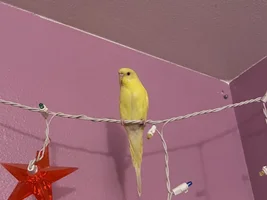
Hello šŸ‘‹ I have a 2 year old male cockatiel named Kiko :)

Today I saw a video online about a woman saying how she was making tater tot’s in the oven that had Teflon lining and when she opened the oven her bird dropped from his cage within minutes and passed away. I know that Teflon is toxic to birds but I don’t know how to protect Kiko from it and other toxic chemicals. We use non-stick pots and pans and Im not certain but pretty sure that it has Teflon coating.

Our kitchen and living room is one big hall (we have an open kitchen) and Kiko’s cage is in the living room. When we mop there or when my mom is cooking and there’s too much smoke, we immediately take him upstairs (if he’s in the living room.) But I heard that even popcorn bags, if over heated are toxic for birds. What is the best way to prevent something like the video I watched from happening? Should I keep him upstairs every time we cook because there’s no prediction wether the food or pots and pans will get overheated and toxic fumes will release in the air. How long after cooking can we bring Kiko back down?

Also, for the toxic fumes that come out of Teflon to harm him, does he need to be close to the kitchen or do the fumes spread really far? Because our living room is pretty big and he’s far from the kitchen (a couple of feet maybe 10 or more?) the video I saw really scared me!
 
There are others who know more about this than me but I think the coating only becomes toxic if it's overheated. It might be better to get Kiko out of that area when you cook for peace of mind
 
Any possibility of changing your cookware? I mean if it's toxic to birds it's probably not great for humans either. Stainless steel and cast iron are safe. There is a learning curve to cooking with them but once you get past that they're wonderful. And both SS and cast iron last forever. I had a set of stainless that my mom gave me when I graduated from HS in 1988 that I used until about 5 years ago and the only reason. I replaced them was the plastic handles fell off. And I have mom's cast iron skillet that is older than I am.

As for popcorn - you might be able to use an air popper instead (check with manufacturer to make sure it doesn't have the chemicals mentioned in the thread Wrench shared above). There are also silicone microwave poppers and I actually have a little bag made of fabric that does a great job.

Another thing to be really aware of currently is air fryers. They are usually teflon coated and they DO get hot enough to off-gas deadly fines. I talked to a woman once who told me that she didn't know this and both of her birds died because of it.

I'm glad you're asking!
 
Hello šŸ‘‹ I have a 2 year old male cockatiel named Kiko :)

Today I saw a video online about a woman saying how she was making tater tot’s in the oven that had Teflon lining and when she opened the oven her bird dropped from his cage within minutes and passed away. I know that Teflon is toxic to birds but I don’t know how to protect Kiko from it and other toxic chemicals. We use non-stick pots and pans and Im not certain but pretty sure that it has Teflon coating.

Our kitchen and living room is one big hall (we have an open kitchen) and Kiko’s cage is in the living room. When we mop there or when my mom is cooking and there’s too much smoke, we immediately take him upstairs (if he’s in the living room.) But I heard that even popcorn bags, if over heated are toxic for birds. What is the best way to prevent something like the video I watched from happening? Should I keep him upstairs every time we cook because there’s no prediction wether the food or pots and pans will get overheated and toxic fumes will release in the air. How long after cooking can we bring Kiko back down?

Also, for the toxic fumes that come out of Teflon to harm him, does he need to be close to the kitchen or do the fumes spread really far? Because our living room is pretty big and he’s far from the kitchen (a couple of feet maybe 10 or more?) the video I saw really scared me!
Thanks for this posting. This is a very confusing subject for many people even though a lot of us knowTeflon is poison for parrots one problem isTeflon is a trade name and companies use other names such as stone granite iron wear whatever. And I’ve caught manufacturer lying on Amazon saying there’s no Teflon or PFOA in it but then I saw they forgot to erase one part of the description said it had yrflonTeflon, I’ve come to the conclusion that no coating is safe at all even if not overheated the safest way is to buy and use only stainless steel and cleaning is actually easier that nonstick if you just clean it with stainless steel Brillo type pad, but the pad must be made of stainless steel. No soap needed, ingĆ” y soap will make goods stock more. The key is every few washings pour a little virgin olive oil in and turn it on hi untill the oil looks shiny. Careful you don’t burn the oil though so use only plain unflavored extra virgin olive oil. And if you can’t afford new pots and pans go to Goodwill or Salvation Army and they have great used ones some like Allclad were originally
over $300 for $10. And one person said they use ceramic, ceramic has coatings and its overheated OR JUST WORN is toxic to birds, so don’t believe anything they say on the boxes of these cookware or onlimebecause a lot of them are not being truthful they are being deceptive.
 
THe problems with coatings is manyfold. A big one is that by changing just 1 molecule in the formula the manufacturer can claim it is not Teflon, but the material still retains its non-stick properties and its propensity for off-gassing if heated beyond its safe temperature. Another problem is that products made in China are always going to be suspect. THe Chinese are chemical geniuses! THats both a good thing and bad. I used to go there several times a year for 10+ years and there was always some crazy food type scare I was warned about. THings like making fake hardboiled eggs and using sweepings from barbershops to make fake soy sauce ( both true!!). As a result, I am highly suspicious of anything made in CHina.

Another big issue is that these coatings are being used in more and more products, aside from the food industry. They show up in clothing, furniture fabrics, carpeting and the list gets bigger all the time. Now, these applications are not ones where the danger of overheating exists but the nature of this family of chemicals is that they do not react with anything. That means they never breakdown into their individual components. As a result they are present in about 99+ % of all living things these days. Newborn babies have been found to have these chemicals in their bodies, as do specimens retrieved from the ocean floor at surprising depths. Hence the name 'Forever Chemicals'. IT is unknown at this point what the effect of these is on living tissue over long periods, even lifetimes, of exposure.
 
Thanks for this posting. This is a very confusing subject for many people even though a lot of us knowTeflon is poison for parrots one problem isTeflon is a trade name and companies use other names such as stone granite iron wear whatever. And I’ve caught manufacturer lying on Amazon saying there’s no Teflon or PFOA in it but then I saw they forgot to erase one part of the description said it had yrflonTeflon, I’ve come to the conclusion that no coating is safe at all even if not overheated the safest way is to buy and use only stainless steel and cleaning is actually easier that nonstick if you just clean it with stainless steel Brillo type pad, but the pad must be made of stainless steel. No soap needed, ingĆ” y soap will make goods stock more. The key is every few washings pour a little virgin olive oil in and turn it on hi untill the oil looks shiny. Careful you don’t burn the oil though so use only plain unflavored extra virgin olive oil. And if you can’t afford new pots and pans go to Goodwill or Salvation Army and they have great used ones some like Allclad were originally
over $300 for $10. And one person said they use ceramic, ceramic has coatings and its overheated OR JUST WORN is toxic to birds, so don’t believe anything they say on the boxes of these cookware or onlimebecause a lot of them are not being truthful they are being deceptive.
Thank you thank you thank you. Bc I'm that person. They have so many new types of pans and its really hard to figure out what is safe for birds that I'm afraid to buy anything
Someone was giving away their cast iron set so that was great. And my other ones are so old I have never had a problem over all these years.
 
The key for cookware is the term nonstick. Teflon is a trademark. Other companies use a variety of the materials used to make Teflon. Supposedly Teflon and it's like require high heat before releasing those toxins. Money and profits dictate otherwise.

This site I found yesterday gives a general overview. Like your friend I didn't know ovens especially the newer and self cleaning were a bird hazard. The site lists a few things like microwave popcorn in bags. It talks about cookware and talks about what types to avoid even those not labeled Teflon. It is easy to read and beginner friendly. Hopefully some of your concerns will be answered.
 
Just a couple of pointers about NONSTICK.

The 'story' of requiring high-heat is true, BUT, the slightest damage to that surface and the stuff will flake and those tiny bits will gas-off and kill! The reason that miners take small birds into mines is that those tiny amounts of those gasses will kill the birds and then the Humans!

NONSTICK products that have been around for a long time have tiny scares, cuts or larger damaged areas and are a moments from gassing-off at a lower temperature.

HEAT RISES! Kitchens are commonly an area where lots of air is rising around heated surfaces and that rising air is going to drift from those area to Cooler areas of that space! The Open Concept home is common these days and a Parrot in any part of that multiple use room that commonly includes Kitchens are deadly for Parrots and any Human that has breathing difficulties. And, moving them upstairs is just as dangerous as the reality of HEAT RISES and upper rooms can rapidly be laden with what was in the Kitchen! Bake cookies and the Kids upstairs will quickly find their way to the Kitchen!

Time to switch away from NONSTICK.
 
I use ceramic coated nonstick pans and all stainless pots. I have a new liquid propane stove and watch my cooking closely using low heat. My kitchen and living area are all one big room with very high vaulted ceilings.
My budgies live in the living room area and fly around from 7am to 7pm. They dont go near the stove area (they perfer the sink). I've never had a problem and have had rhis set up for 8 years. We don't have any extra rooms to put the budgies in.
I think the key is not using Teflon and closely supervising my cooking.
 
My daughter thinks close supervision is a form of bird paranoia. I ignore her.
 
We use cast iron and copper bottom stainless steel. Juliette can never ever be out when there is a hot stove or hot food. She is a magnet for disaster and is all in everybody's business and is extremely fast.
Tonight she was very indignant that I had the audacity to lock her up while I cooked dinner. She makes fart noises when she's mad.
 
The big ones to worry about in that exact layout: PTFE/PFOA from non-stick cookware, self-cleaning oven cycles, scented candles, plug-in air fresheners, aerosol sprays (including some cleaning sprays and hairspray), overheated cooking oils. For Teflon specifically, the kill zone is any pan that gets hotter than about 500F, which an empty pan does in under 3 minutes. Practical things: swap to ceramic, stainless or cast iron in the kitchen, never preheat an empty pan, cover the pan while cooking, and run the range hood on high whenever you cook. Move Kiko to a different room with the door shut during the self-clean cycle of the oven. Popcorn bags and air fryers with non-stick coatings are the sneaky ones, don't use them.
 
Sl off this topic. But related to toxins in the home. Fleas and ticks seem epidemic already. Has anyone heard if food grade diatomaceous earth was safe around birds? I know if used correctly it is safe in home around pets. Humans are safe unless they have respiratory problems.
 
I use ceramic coated nonstick pans and all stainless pots. I have a new liquid propane stove and watch my cooking closely using low heat. My kitchen and living area are all one big room with very high vaulted ceilings.
My budgies live in the living room area and fly around from 7am to 7pm. They dont go near the stove area (they perfer the sink). I've never had a problem and have had rhis set up for 8 years. We don't have any extra rooms to put the budgies in.
I think the key is not using Teflon and closely supervising my cooking.
Liquid Propane is held in the tank, but what you are cooking with is a gas that liquid propane turns into either along the top of the tank or prior to the pressure regulator.
 
Back
Top Bottom